What it is
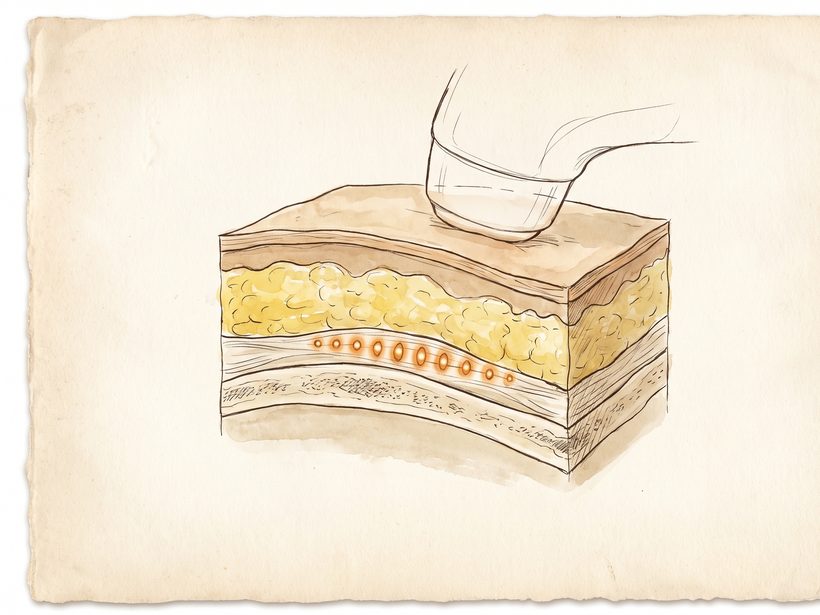
Focused ultrasound, delivered through intact skin to the layer a surgeon would tighten in a facelift.

Reviewed 28 Sep 2026 · Updated 27 Oct 2026 · Dr Ong Jin Khang · MMC 45245 · LCP holder · The Retreat Clinic, Setia Alam
Ultherapy is a focused ultrasound treatment that lifts and tightens the brow, jawline and neck without cutting the skin. It suits early to moderate laxity, where the face has started to soften but is nowhere near needing surgery.
It is usually planned as a single session, at the clinic in Setia Alam, taking about an hour. There is no downtime beyond possible brief flushing, and the lift develops gradually over two to three months as new collagen forms, typically lasting up to a year. The fee for Ultherapy in Malaysia is set per treatment, by the lines delivered and the areas treated, as what an Ultherapy fee is made of explains.
At The Retreat Clinic it is performed by Dr Ong, and only after he has assessed whether your laxity is the kind it can actually improve.
At a glance
What it is
Focused ultrasound, delivered through intact skin to the layer a surgeon would tighten in a facelift.
Who it suits
Early to moderate laxity of the brow, jawline or neck.
Not advanced sagging or volume loss.
Sessions
One
Usually one, repeated when the effect has faded rather than sold as a course.
Downtime
None
Skin may be briefly flushed or tender.
Performed by

Dr Ong
After an assessment of suitability.
Timeline
How it works
Ultherapy includes ultrasound imaging of the tissue during treatment, so the energy is placed at the depth of your anatomy rather than an assumed one.
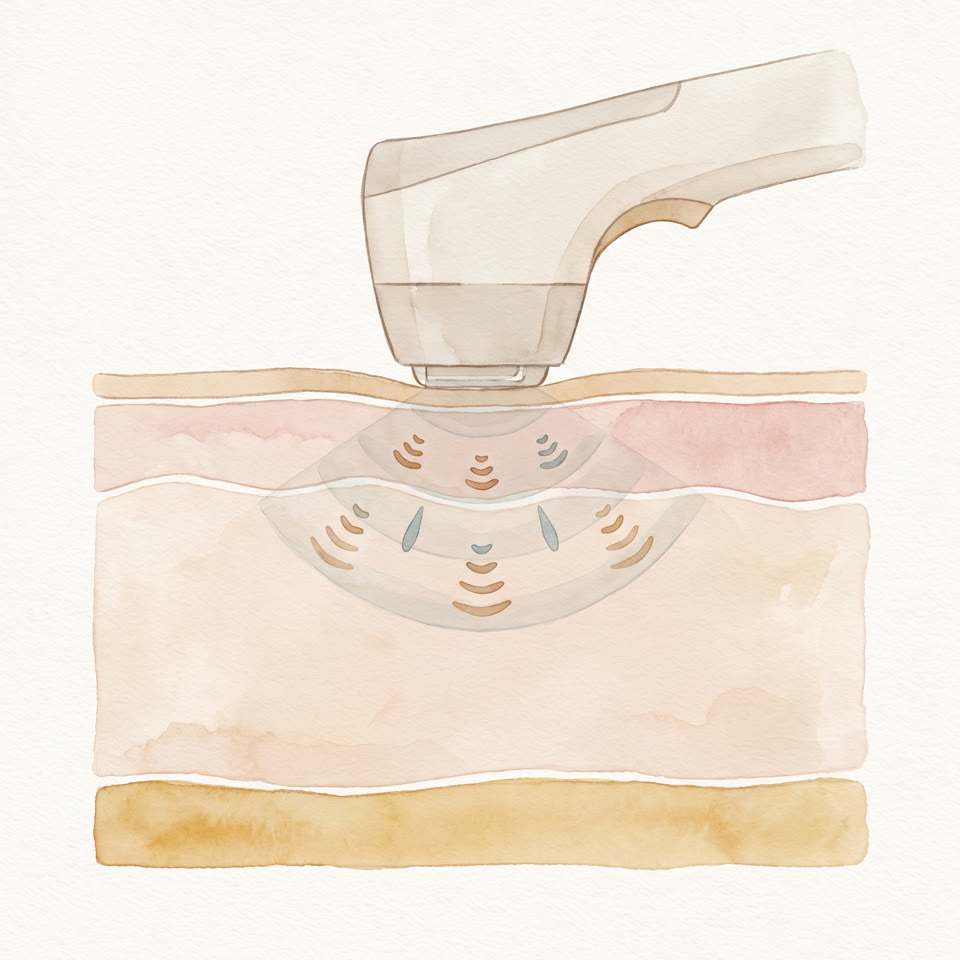
Focused ultrasound passes through the surface of the skin without breaking it, to three depths.
1.5 mm3 mm4.5 mm
The deepest reaches the SMAS, the same layer a surgeon would tighten in a facelift. The treatment heats small focal points in that layer.
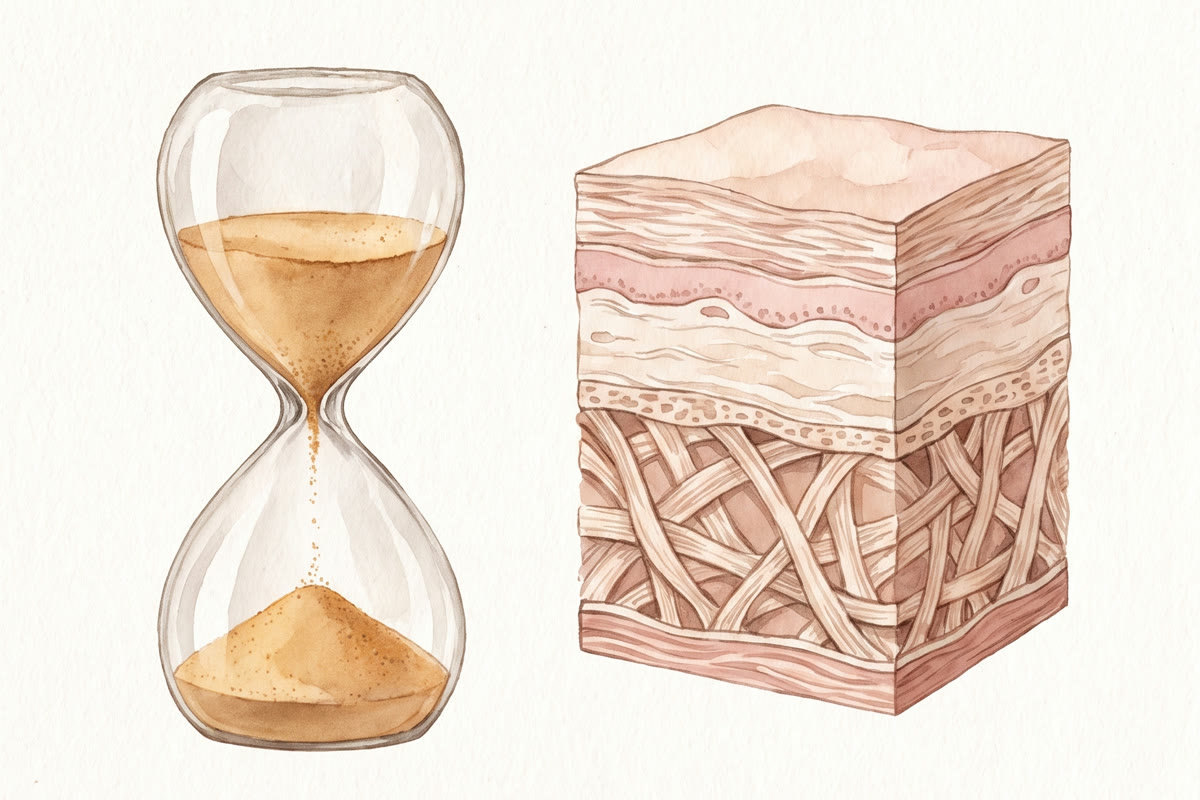
The body lays down new collagen there over the following two to three months. The lift develops gradually, which is exactly how it is designed to work.
Who it suits
The distinction the assessment most often corrects is descent versus deflation.
Compare
The lower face does not age in one way, and each layer has its own instrument. Which one fits, if any, is what the assessment settles.
The full read
At The Retreat Clinic, Dr Ong Jin Khang (MMC 45245, LCP for aesthetic practice from the Ministry of Health) has been the only doctor since the clinic opened in Setia Alam in April 2013. He performs every Ultherapy treatment at the clinic himself, after his own assessment of whether the laxity is the kind focused ultrasound can improve. He has performed Ultherapy since 2011, and the clinic has offered the treatment since it opened in 2013. The clinic was the first in Setia Alam to offer Ultherapy, in 2013, and at AMSC 2025 in Kuala Lumpur he chaired the session New Frontiers in Energy-Based Devices. Each first here is dated, with the post that announced it, in Dr Ong's record. His registration and LCP can be checked on the public registers: how to check them.
Ultherapy delivers focused ultrasound energy through the surface of the skin, without breaking it, to three depths, typically 1.5mm, 3mm and 4.5mm. The deepest of those reaches the SMAS, the same layer of tissue a surgeon would tighten in a facelift. The treatment heats small focal points in that layer, and the body responds by laying down new collagen there over the following two to three months. The lift develops gradually, which is exactly how it is designed to work.
Two things separate this from a casual tightening facial. The first is depth: most treatments for laxity work at or near the surface, while the layer that has loosened sits well below it. The second is precision. Ultherapy includes ultrasound imaging of the tissue during treatment, so the energy is placed at the depth of your anatomy rather than an assumed one. That imaging is also why the treatment rewards an operator who knows what they are looking at.
It is well suited to early laxity on the brow, the jawline and the neck. When the support layer has begun to descend but the skin is otherwise in good condition, Ultherapy is one of the few non-surgical options that addresses the depth where the change actually originates. A softening jawline holds its line better, a heavy brow sits a little higher, the neck stays where it should.
It is also a reasonable choice for patients in their thirties and forties who want to slow the trajectory of laxity rather than wait and address it later. Collagen work done while the tissue still responds well tends to be more rewarding than collagen work done after years of descent. In that sense the treatment is less about turning back the clock and more about slowing how fast it runs.
A good Ultherapy result is restrained. People notice you look less tired, or ask whether you have been sleeping better. Nobody should be able to point at what changed.
Ultherapy does not replace surgery. Once laxity is advanced, with significant excess skin or jowling, the improvement it can give is modest, and paying for a modest result on an advanced problem is a poor trade. In those cases the honest answer may be surgical, and Dr Ong will say so rather than sell the appointment.
It is also the wrong tool for the wrong diagnosis. Skin quality, pigment and fine lines are problems at a different layer entirely; treating a skin quality complaint with focused ultrasound is treating the wrong floor of the building. The same applies when a face that looks saggy is in fact a face that has lost volume. Tightening cannot restore what has deflated, and on a lean face it can even sharpen the look of depletion. That distinction, descent versus deflation, is the most common thing the assessment corrects.
There are also patients for whom it is simply not offered. It is deferred in pregnancy. It is avoided where there are open lesions or severe active acne in the treatment area, and where certain implants sit in or near the field. And it is declined for anyone expecting a surgical degree of change, because that disappointment is predictable and avoidable.
Ultherapy is one of the most under-explained treatments in aesthetic medicine. Focused ultrasound is sold across the region in every kind of setting, often by the session and rarely with a diagnosis attached, so it is regularly offered for laxity it cannot fix. The result is then judged disappointing, and the category takes the blame for what was a selection problem all along.
The consultation is where we work out whether Ultherapy is genuinely the right tool, and if it is not, what is.
Done on the right candidate, with settings tuned for that person's tissue depth, the result is restrained and real. Dr Ong assesses laxity, skin condition and bone structure together, and recommends Ultherapy only when those three line up. When they do not, he will name the road that fits better, whether that is collagen work, volume, or a candid word about surgery.
Where the need is shallower, broader tightening rather than one deep focal plane, radiofrequency covers ground focused ultrasound does not, and XERF is that road at the clinic. Which one fits, if either, is what the assessment settles.
A session takes about an hour, performed by Dr Ong at the clinic in Setia Alam. Sensation varies, mild for some, sharper for others, often where bone is close to the surface, and settings can be adjusted through the session to manage it. There is no downtime; the skin may be slightly flushed or tender for a short while, and you can return to your day.
The lift develops slowly over two to three months and typically lasts up to a year, depending on age and how the face is ageing more broadly. It is usually planned as a single session, repeated when the effect has faded, rather than sold as a course. The plan itself, depths, areas and whether the treatment is worth doing at all, is set at the assessment.
Ultherapy is not a facelift, a filler, or a laser. It does not cut, does not add volume, and does not resurface pigment or texture at the surface. It is one thing: a way of prompting collagen to rebuild at a specific deep layer, using focused sound rather than a blade or a needle. That narrow job is the whole of what it is designed to do, and confusing it with a broader category of treatment is where disappointment usually starts.
It is also worth separating from HIFU. Focused ultrasound devices vary considerably in how they are built and how they are supervised, and what Ultherapy specifically lifts, and what it cannot is a narrower and more useful question than what focused ultrasound in general can do. In Malaysia, focused ultrasound for tightening now sits under a designated medical device permit, which is one reason who operates the machine matters as much as which machine it is.
The comparison patients most often ask about is XERF, the clinic's radiofrequency tightening option. Both work by heating tissue to trigger collagen remodelling, but at different depths and through different physics, ultrasound converging at one precise focal plane, radiofrequency spreading across a broader field. Which one, if either, suits a given face is an assessment question, not a preference between two similar-sounding names.
Most side effects of Ultherapy are mild and short. There is discomfort during the session, then some redness, tenderness and slight swelling. Small tender spots at depth settle over a week or two.
Rarely, there can be welts or bruising, or temporary numbness or tingling near a nerve. The numbness usually resolves on its own, though nobody promises it will. Also rare are temporary nerve weakness, where heat near a nerve can leave one side of the smile lopsided for a while, and burns, which point to a delivery fault and not to a normal reaction. Heat that lands in fat can injure the fat cells there, and that loss of volume does not reverse on its own. No reliable rate exists for the rare effects.
Call the clinic if redness or tenderness is getting worse rather than better, or if numbness spreads or is not settling. Call the same day for any new droop, weakness or unevenness in the face, or for blistering or broken skin, and early if a hollow is developing where the face was fuller. The full account is in Ultherapy and HIFU side effects: what can happen, how often, and what is done about it.
Malaysia's Medical Device (Designated Medical Device) Order 2026 names focused ultrasound (HIFU) for tightening among the devices that may only be operated under a permit. What the Order covers, and the questions it hands you, is set out in our explainer. How to check any doctor's registration and credentialing before an energy-based treatment, and whether the doctor treats you personally, is set out in how to check an aesthetic doctor in Malaysia. Which procedures the Ministry of Health says only a registered doctor may perform, and what assistants may and may not do, is set out in our explainer. How to weigh a doctor's experience with a treatment is set out in how to choose an experienced doctor.
Micro-focused ultrasound is priced per treatment, by the number of lines delivered and the areas treated; a single-use transducer, the doctor's time and the designated device permit are inside that fee, and the number for any one person is stated at consultation once the dose is known. What any energy treatment's fee is made of, why two fees can sit far apart, and what to ask any clinic are on the cost guide. What goes into an Ultherapy fee is set out in what an Ultherapy fee is made of.
Sensation varies from person to person, mild for some, sharper in places for others, often where bone is close to the surface. The settings can be adjusted during the session to keep it tolerable, and the discomfort ends when the session does. There is no downtime afterwards.
No. It is for early laxity, when the face has begun to soften but the skin is still in good condition. Once laxity is advanced, with excess skin or jowling, the result it gives is modest, and surgery is the more honest answer. If that is your situation, Dr Ong will say so at the assessment.
Typically up to a year, depending on age and how the face is ageing more broadly. Ageing continues after any treatment, so many patients repeat it once the effect has faded. Whether a repeat is worthwhile is decided at review rather than pre-sold as a package.
The lift develops gradually as new collagen forms, usually over two to three months. It is not designed to be dramatic on the day. Photographs taken a few months apart tend to show the change better than the mirror does.
Early laxity on the brow, jawline and neck, where the skin itself is still in good condition, and patients in their thirties or forties who want to slow the trajectory of laxity rather than wait. Suitability is decided in person, since skin quality and bone structure matter as much as age.
Anyone whose laxity is advanced enough to need surgery, and anyone whose real concern is skin quality or lost volume, because those are different problems with different answers. It is deferred in pregnancy and avoided where there are open lesions, severe active acne or certain implants in the treatment area. The assessment exists to catch all of this before any energy is delivered.
Ulthera System is the device, Ultherapy the treatment. In the words of Dr Ong, HIFU is a copy of Ultherapy. Ultherapy can image the layers beneath the skin to 8 mm while treating. No head-to-head study of the two was found. Since 1 June 2026, anyone operating a HIFU device in Malaysia needs a designated medical device permit. More in Ultherapy vs HIFU: which lifts more.
No. You can return to your day straight after the session. The skin may be slightly flushed or tender at first, and that settles. The quiet surface is the point: the work happens at depth, over months.
Ultherapy uses focused ultrasound to reach one deep, precise plane, including the SMAS. XERF uses radiofrequency to heat a broader field across several depths in a single pass. Neither is simply better: they suit different laxity patterns, and staging one, the other, or both is a decision made at assessment, not off a brochure. How the tightening tools compare covers this in more depth, and what the sensation is actually like is covered separately.
Yes. Ulthera is the name of the device system, and Ultherapy is the name of the treatment it delivers; the two terms describe the same system, not two different ones. HIFU machines, which in the words of Dr Ong are copies of Ultherapy, vary considerably in how they are built and supervised, which is why the device name and the operator both matter.
Yes. Ultherapy is offered at The Retreat Clinic in Setia Alam, Shah Alam, performed by Dr Ong after an assessment of whether your laxity is the kind it can actually improve. In Malaysia, focused ultrasound for tightening now sits under a designated medical device permit, so who operates the machine matters as much as which machine it is.
The clinic does not publish a price list. Cost is driven mainly by the number of lines delivered and the areas treated, and the figure for any one person is stated at consultation once that dose is known. What any energy treatment's fee is made of, and what to ask any clinic before booking, is set out in before you book a low-priced HIFU.
Ultherapy gives a real result when laxity is early and skin condition is still good, with the face firming gradually as new collagen forms over two to three months. The result is meant to be restrained rather than dramatic, so people tend to notice you look less tired rather than point to one specific change. It will not help skin that has sagged significantly or a face that has mainly lost volume, which is why assessment comes before any recommendation.
No. Dr Ong does not use numbing cream for Ultherapy at The Retreat Clinic. The settings are adjusted during the session to keep it tolerable, and the discomfort ends when the session does.
Dr Ong Jin Khang performs every Ultherapy treatment at The Retreat Clinic himself. He has performed Ultherapy since 2011, and the clinic has offered the treatment since it opened in 2013. The clinic was the first in Setia Alam to offer Ultherapy, in 2013, and at AMSC 2025 in Kuala Lumpur he chaired the session New Frontiers in Energy-Based Devices. He has been the clinic's only doctor since it opened in Setia Alam in April 2013; his Malaysian Medical Council registration (MMC 45245) and his Ministry of Health LCP for aesthetic practice can both be checked on public registers.
Disclosure: In September 2026 Cynosure Lutronic, which makes XERF and PicoSure, gave Dr Ong its XERF Innovation Leader and XERF Clinical Visionary awards at the Malaysian launch of XERF. How he thinks about ties like these: The quiet we kept: what shapes what your doctor recommends.
Related reading
In person, with Dr Ong. Skin and concerns are assessed. The right course is recommended, which may or may not include Ultherapy.
小红书 · RED
Retreat 美学思路

扫码关注,或在手机上点下方按钮 · Scan, or tap below on your phone
在小红书打开 · Open in RED小红书号 / RED ID 5334997396
Type a word or two. For example: