
What it is
XERF delivers dual-frequency monopolar radiofrequency, reaching more than one depth in a pass and raising the deeper layers of the skin to the threshold where collagen remodelling begins. New collagen forms gradually, so the change builds over weeks to months rather than appearing overnight. The system reads the tissue as it treats, adjusting energy to the skin in front of it, and an integrated cooling system protects the surface while the depth is worked. The device is registered with Malaysia's Medical Device Authority.
Two things separate it from surface tightening. The first is the dual frequency: reaching more than one depth in a single pass lets the energy work the layers where laxity actually sits, rather than only the surface that shows it. The second is control. The device reads the tissue as it goes and adjusts to what is in front of it, while the cooling holds the surface safe as the deeper layers come to temperature. Radiofrequency tightening lives or dies on that control, which is why the same category can look impressive in one pair of hands and disappointing in another.
What it does well
It suits early to moderate skin laxity of the face, lower face, submental area and neck, in someone who wants tightening rather than volume and understands the result is gradual. A softening jawline holds its line better, the neck sits where it should, and the lower face reads a little firmer. The change is meant to be quiet: you look less tired and less heavy, not visibly worked on.
The comfort profile is part of its case. The integrated cooling means most patients need no numbing, and the session is comfortable rather than something to brace against. Comfortable is the honest word, not painless, and we will not pretend otherwise. In the right face it pairs with tools that do a different job, focused ultrasound at a deeper single plane or collagen work from within, sequenced when the assessment supports it rather than stacked by default.
What it does not do, and who it is not for
XERF is not a facelift, and it does not add volume. If the concern is volume loss, a hollow cheek or a deflated mid-face, radiofrequency tightening is the wrong tool and can even sharpen the look of depletion; that is a filler or structure conversation instead. Once laxity is advanced, with significant excess skin or established jowling, the honest answer is surgical, and we say so and refer rather than sell a modest result at a premium.
It is also the wrong choice for anyone expecting an overnight change. The collagen response is gradual by nature, and a patient who needs a result by a fixed date is better told that plainly than sold a course that cannot meet it. It is deferred where the skin is not ready, and avoided in the usual radiofrequency cautions, including certain implanted electronic devices in or near the treatment field. Those are assessment findings, not checkout questions.
XERF, Ultherapy and Onda: the lower face in layers
The lower face does not age in one way. It loses small fat pockets, the deep support descends, and the skin itself loosens. Three different changes at three different layers, and each has its own instrument. OndaPro reduces a localised fat pocket, the fullness under the chin among them. Ultherapy lifts the deep support with focused ultrasound. XERF tightens the skin itself with radiofrequency. Because they work at different layers, they are not rivals for the same job. On the right face they are sequenced, reduce then lift then tighten, as one plan rather than three separate sales.
That is the honest case for combining them: a problem spread across layers is served better by matching a tool to each layer than by asking one device to do all of it. But layering is a diagnosis, not a default. The assessment decides which of the three layers is actually yours, so the real plan is often one of them, sometimes two in the right order, occasionally all three, and sometimes none, when the issue is volume loss that wants structure, or advanced laxity that only surgery will move. Three treatments sold as a set before anyone has read your face is the opposite of this. The three roads to collagen piece maps how these calls get made.
Our view
I was the first Malaysian doctor to be treated with XERF, and the first to perform it, both overseas, before it arrived in Malaysia. I do not offer a tool I have not understood.
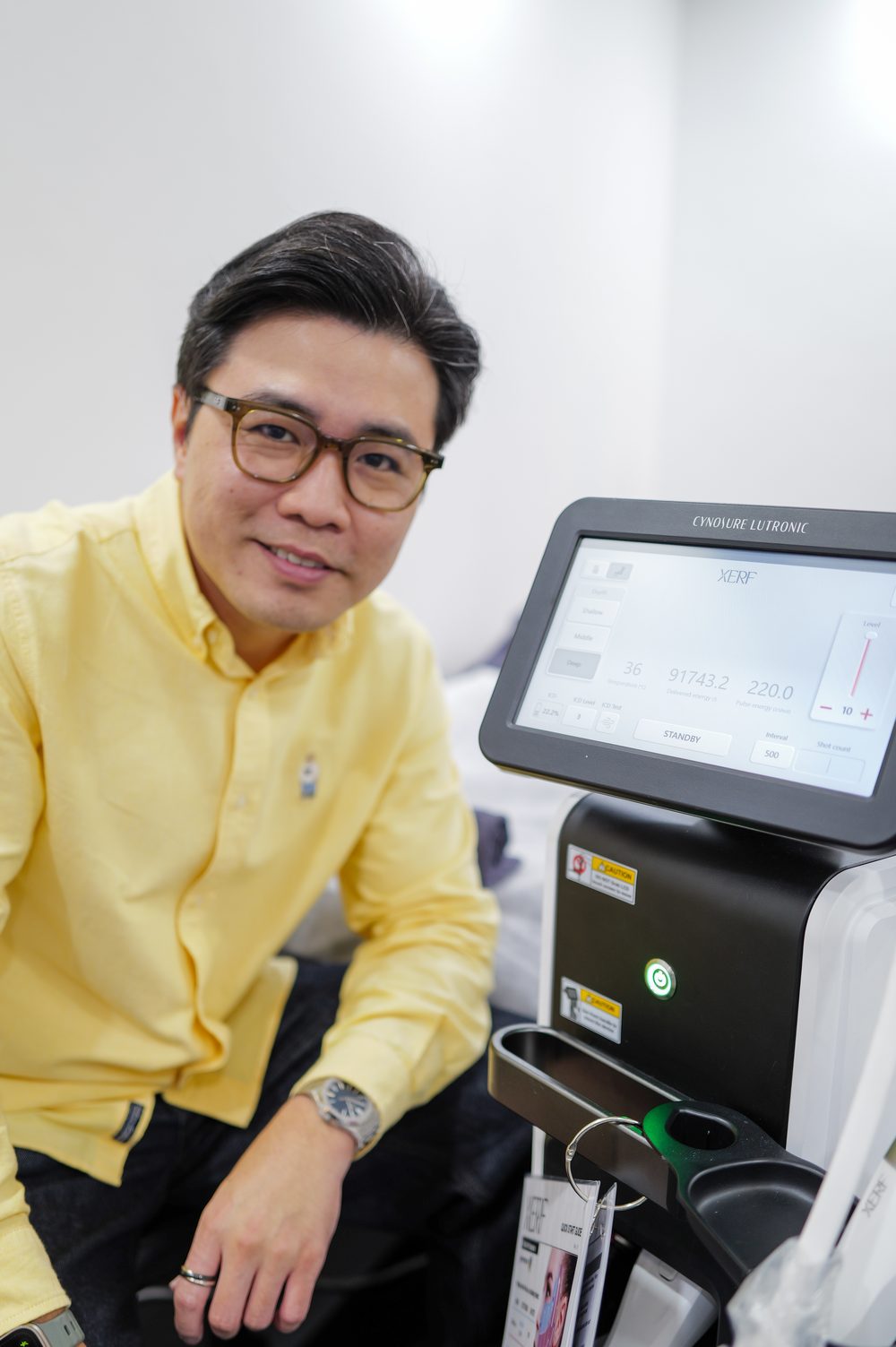
That is not a headline; it is a standard. I do not bring a machine into this clinic until I have been under it and held the handpiece myself, because tightening is a category where devices are routinely sold beyond their depth. So the rule here does not change with a new device. The face decides, the assessment maps the laxity, and XERF is recommended only where tightening is genuinely the diagnosis, sometimes alone, sometimes alongside another tool, and sometimes not at all.
Practical notes
XERF is available now at The Retreat Clinic in Setia Alam, following its 2026 Malaysian launch, by assessment with Dr Ong. A course is typically two sessions, four to six weeks apart, with maintenance usually every six to twelve months. That is a protocol, not a promise: there is no proven long-term durability figure for this device yet, and we will not invent one.
Expect subtle tightening early, with the meaningful change developing as new collagen forms over the following months. Most patients need no numbing and there is no real downtime; the skin may be a little flushed for a short while. The plan itself, whether XERF is the right road at all, is set at the assessment rather than pre-sold as a package.
What XERF costs and how many sessions
A XERF course at The Retreat Clinic is priced per course, by the areas treated: the face, or the face and neck together. The fee covers the assessment-led plan and the two sessions that make up a standard course, four to six weeks apart, and it is stated in full at the consultation, before anything is booked. The consultation comes first and is charged separately; if XERF is not the right tool for your face, that consultation is where we say so.
Two sessions is the usual course; a single session is offered only where the assessment supports it. Maintenance, when it is wanted, is typically one session every six to twelve months, charged per session, and it is booked when your skin asks for it rather than on a fixed schedule. How treatment fees are put together, why two fees for the same class can differ, and what to ask any clinic are set out in the cost guide.
Who should be doing this
Radiofrequency devices are not named in Malaysia's Medical Device (Designated Medical Device) Order 2026, which covers specified lasers, HIFU and liposuction devices. Every medical device in Malaysia still has to be registered with the Medical Device Authority, and this one is. What the Order covers, and what it leaves out, is set out in our explainer. How to check any doctor's registration and credentialing before an energy-based treatment, and whether the doctor treats you personally, is set out in how to check an aesthetic doctor in Malaysia. Which procedures the Ministry of Health says only a registered doctor may perform, and what assistants may and may not do, is set out in our explainer.
What it costs and why
How this treatment class is priced, what moves a fee, and what to ask any clinic are set out on the cost guide.